


01/
本能寺について
About Honnoji Temple
The Origins of Honnoji Temple
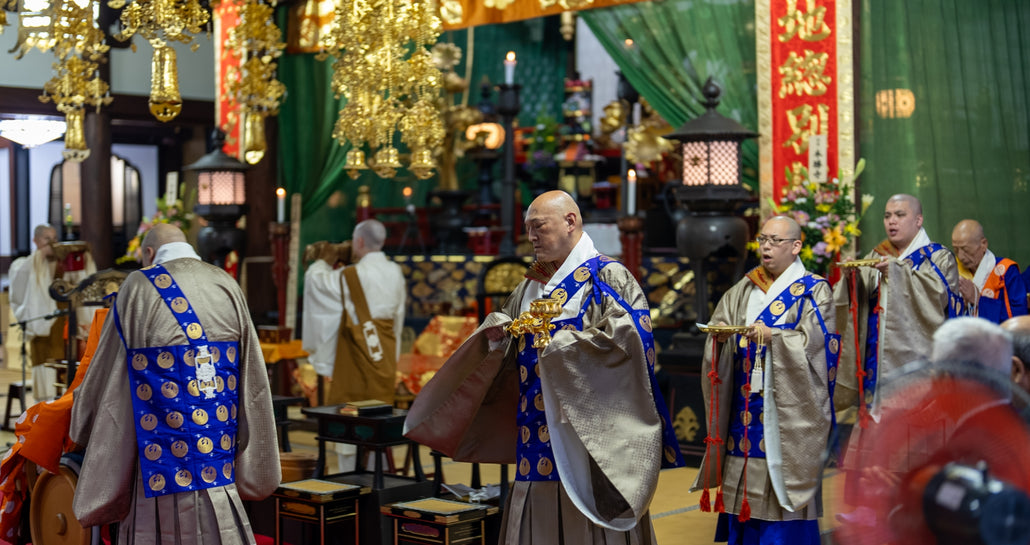
Honnoji Temple has long kept the lamp of the Hokke (Nichiren) Dharma burning on the banks of Kyoto's Kamo River, one of the city's most scenic settings. Yet it is surprisingly little known that Honnoji is the grand head temple of the Honmon branch of the Hokke sect (Hokkeshū Honmon-ryū), which spreads the teachings of Nichiren Daishōnin.
Revering Nichiryū Shōnin as its founder, Honnoji is a great sacred site where the fundamental meaning of the Lotus Sutra (Hokekyō) and the true intent of Nichiren Daishōnin are expounded, and where the faithful chant, embrace in faith, and practice the Odaimoku (the sacred invocation).
The true intent of Nichiren Daishōnin's teaching is this: that there is no path to our own Buddhahood other than to devote ourselves, body and soul, to "Namu Myōhō Renge Kyō" (Devotion to the Lotus Sutra of the Wonderful Dharma)—the seed of the original cause transmitted by Bodhisattva Jōgyō, as taught in the eight essential chapters (Honmon Hachihon) of the Lotus Sutra—and to believe in and chant the essential Odaimoku.
It was the lifelong aspiration of Nichiren Daishōnin that all people might embrace "Namu Myōhō Renge Kyō" in faith and chant it aloud. In 1415 (the 22nd year of the Ōei era), the founder Nichiryū Shōnin, together with his uncles Nichizon Shōnin and Nichidō Shōnin, strove to reform the discipline of Myōhonji (present-day Myōkenji); but, unable to fulfill his aim, he departed from that temple. He then founded Hon'ōji on the land between Aburanokōji-Takatsuji and Gojō-Bōmon, and began his ministry so that people might chant "Namu Myōhō Renge Kyō" aloud, as Nichiren Daishōnin had wished.
Revering Nichiryū Shōnin as its founder, Honnoji is a great sacred site where the fundamental meaning of the Lotus Sutra (Hokekyō) and the true intent of Nichiren Daishōnin are expounded, and where the faithful chant, embrace in faith, and practice the Odaimoku (the sacred invocation).
The true intent of Nichiren Daishōnin's teaching is this: that there is no path to our own Buddhahood other than to devote ourselves, body and soul, to "Namu Myōhō Renge Kyō" (Devotion to the Lotus Sutra of the Wonderful Dharma)—the seed of the original cause transmitted by Bodhisattva Jōgyō, as taught in the eight essential chapters (Honmon Hachihon) of the Lotus Sutra—and to believe in and chant the essential Odaimoku.
It was the lifelong aspiration of Nichiren Daishōnin that all people might embrace "Namu Myōhō Renge Kyō" in faith and chant it aloud. In 1415 (the 22nd year of the Ōei era), the founder Nichiryū Shōnin, together with his uncles Nichizon Shōnin and Nichidō Shōnin, strove to reform the discipline of Myōhonji (present-day Myōkenji); but, unable to fulfill his aim, he departed from that temple. He then founded Hon'ōji on the land between Aburanokōji-Takatsuji and Gojō-Bōmon, and began his ministry so that people might chant "Namu Myōhō Renge Kyō" aloud, as Nichiren Daishōnin had wished.
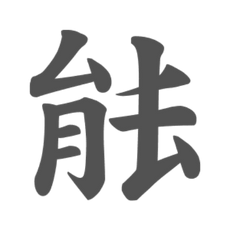
From 1415 to 1432 the temple bore the name "Hon'ōji," and from 1433 to the present day it has used the name "Honnoji." Both names derive from the phrase "Honmon Hachihon ni sōō shi yoku kōzuru no tera"—"the temple well suited to, and able to spread widely, the eight essential chapters." Moreover, the character "nō" (能) is today written in a variant form: because the temple suffered fire on five occasions, the two "hi" (匕) elements—evocative of fire (火)—were altered to ward off further conflagration. In the Uesugi version of the "Rakuchū Rakugai-zu Byōbu" (Folding Screens of Scenes In and Around Kyoto), the temple appears written as "Honnoji."
The history of Honnoji is, in essence, a history of founding, rebuilding, and restoration. Yet through this history of adversity, Honnoji has served as a central pillar of faith for ordinary people.
The History of Honnoji Temple
The First Founding
1415
Nichiryū Shōnin, who had striven to reform the discipline of Myōhonji, was unable to fulfill his aim and left the temple. He opened a new temple gate on the land between Aburanokōji-Takatsuji and Gojō-Bōmon, naming it Hon'ōji.
1418
Destroyed by adherents of Myōhonji on the orders of Gatsumyō Shōnin.
The Second Founding
1429
With the support of Kosodeya Sōku, Hon'ōji was rebuilt at Uchino (in the area of present-day Nishijin).
The Third Founding
1433
Honnoji was founded at Rokkaku-Ōmiya, with Nyoiōmaru as its principal patron.
1536
Burned in the Tenbun Hokke Disturbance, attacked by the forces of Enryakuji.
The Fourth Founding
1545
Nisshō Shōnin (the 12th chief abbot) founded the temple at Shijō-Nishinotōin.
1582
Destroyed by fire in the Honnōji Incident; Lord Nobunaga took his own life.
The Fifth Founding
1592
Rebuilt by Nichien Shōnin (the 14th chief abbot) and relocated to its present site by order of Hideyoshi.
1788
Destroyed in the Great Tenmei Fire.
The Sixth Founding
1840
Rebuilt by Nichion Shōnin (the 77th chief abbot).
1864
Destroyed by fire in the Kinmon Incident (the Hamaguri-gomon Incident).
The Seventh Founding
1928
The present main hall was rebuilt.
A Greeting from the Chief Abbot
I am Akada Nittai, Chief Abbot of the Head Temple Honnoji.
Through the Tenbun Persecution, the Honnoji Incident, and many other upheavals of history, Honnoji has preserved and handed down the light of the Dharma as the principal training center of the Hokkeshu. Since establishing our precincts here at Teramachi Sanjo in Kyoto, we have been sustained by our many devotees and by visitors from within Japan and abroad, and for this I offer my deepest gratitude.
The Odaimoku, "Namu Myoho Renge Kyo," which Nichiren Shonin revealed at the risk of his own life, retains undiminished its great power to bring happiness and peace to all people. In these uncertain times, we are all the more resolved to hold that light high and to serve as a spiritual anchor for our devotees.
I sincerely invite you to join us for the temple's ceremonies and services, and to deepen your own connection with the Odaimoku.
Gassho
Akada Nittai
142nd Chief Abbot, Head Temple Honnoji
Through the Tenbun Persecution, the Honnoji Incident, and many other upheavals of history, Honnoji has preserved and handed down the light of the Dharma as the principal training center of the Hokkeshu. Since establishing our precincts here at Teramachi Sanjo in Kyoto, we have been sustained by our many devotees and by visitors from within Japan and abroad, and for this I offer my deepest gratitude.
The Odaimoku, "Namu Myoho Renge Kyo," which Nichiren Shonin revealed at the risk of his own life, retains undiminished its great power to bring happiness and peace to all people. In these uncertain times, we are all the more resolved to hold that light high and to serve as a spiritual anchor for our devotees.
I sincerely invite you to join us for the temple's ceremonies and services, and to deepen your own connection with the Odaimoku.
Gassho
Akada Nittai
142nd Chief Abbot, Head Temple Honnoji
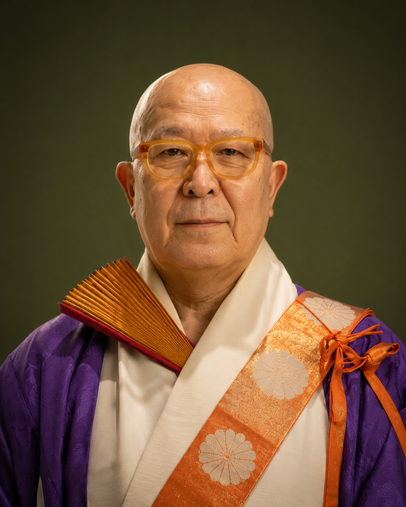
Akada Nittai, 142nd Chief Abbot, Head Temple Honnoji
Oda Nobunaga and Honnoji Temple
Nisshō Shōnin and Nobunaga
Oda Nobunaga, a figure of Japan's medieval Warring States period, remains one of the nation's most popular warlords. From early on, Nobunaga was aware that the Emperor lacked sufficient funds for his daily life, and he was always seeking some way to be of service.
Nobunaga's Religious Reforms
Much has been said about Nobunaga's religious policies, but did you know that since the Warring States period, the great temples had accumulated land and military force, rivaling the power of feudal lords?
On occasion, these great temples would refuse to comply with the orders of the rulers. This led Nobunaga to set fire to Mt. Hiei, subjugate the Ikko-ikki, attack the great temples of Nara, and mount campaigns against Mt. Koya.
Yet was not his true intention a warning to a corrupt Buddhist world—a call to return to the original form of Buddhism? This view, too, is thought to have been a conviction handed down to him from Nissho Shonin. Such was the influence Nissho Shonin exerted—and what manner of temple was Honnoji in those days?
On occasion, these great temples would refuse to comply with the orders of the rulers. This led Nobunaga to set fire to Mt. Hiei, subjugate the Ikko-ikki, attack the great temples of Nara, and mount campaigns against Mt. Koya.
Yet was not his true intention a warning to a corrupt Buddhist world—a call to return to the original form of Buddhism? This view, too, is thought to have been a conviction handed down to him from Nissho Shonin. Such was the influence Nissho Shonin exerted—and what manner of temple was Honnoji in those days?
Nobunaga and Honnoji
Including the Honnoji Incident, Nobunaga stayed at Honnoji a total of four times according to clear historical records. It is said there were three reasons for his stays at Honnoji.
Reason 1
It seems Nobunaga had long wished to draw close to the imperial family. Nissho Shonin (1501–1579), the most eminent monk at Honnoji in Nobunaga's time, was a relative of the Emperor. Nobunaga therefore planned to stay at Honnoji to receive instruction in the Buddhist teachings from Nissho Shonin and, at the same time, to build his connections with the imperial family. It is through this connection that to this day the head abbot of Honnoji is permitted to bear the imperial chrysanthemum crest.
Reason 2
At the time of the Honnoji Incident, Honnoji was far larger and more expansive than it is today. The temple was surrounded by high walls and deep moats, making it a very secure structure. It seems Nobunaga was fond of this magnificent, well-fortified Honnoji.
Reason 3
From early on, Honnoji had conducted missionary activities on Tanegashima and in Sakai, Osaka, meaning there were many followers on Tanegashima. Firearms were introduced to Tanegashima in 1543. This made it easy to obtain guns and gunpowder by requesting through Honnoji. Nobunaga saw value in this, and in exchange for promising security of the temple precincts, he encouraged Honnoji's assistance with the trade in firearms and gunpowder—another reason he chose to stay at Honnoji.
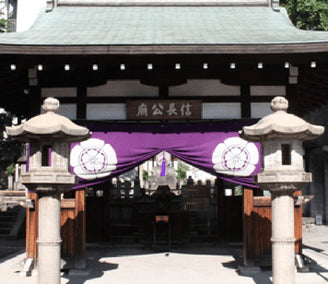
Nobunaga's Mausoleum
Erected after Nobunaga took his own life, by order of his third son, Nobutaka.
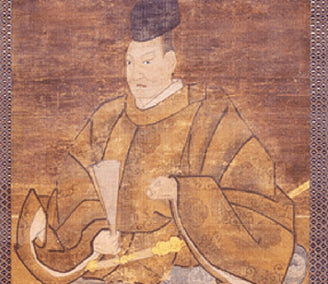
Portrait of Oda Nobunaga
Unlike the commonly circulated images, this portrait of Lord Nobunaga presents an unusual countenance, with no mustache beneath the nose.
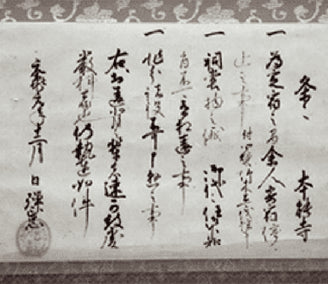
Oda Nobunaga's Vermilion-Seal Edict of Protection (Kinzei)
At the close of the document is stamped the horseshoe-shaped vermilion seal bearing the motto "Tenka Fubu" (to bring the realm under one rule by force of arms).